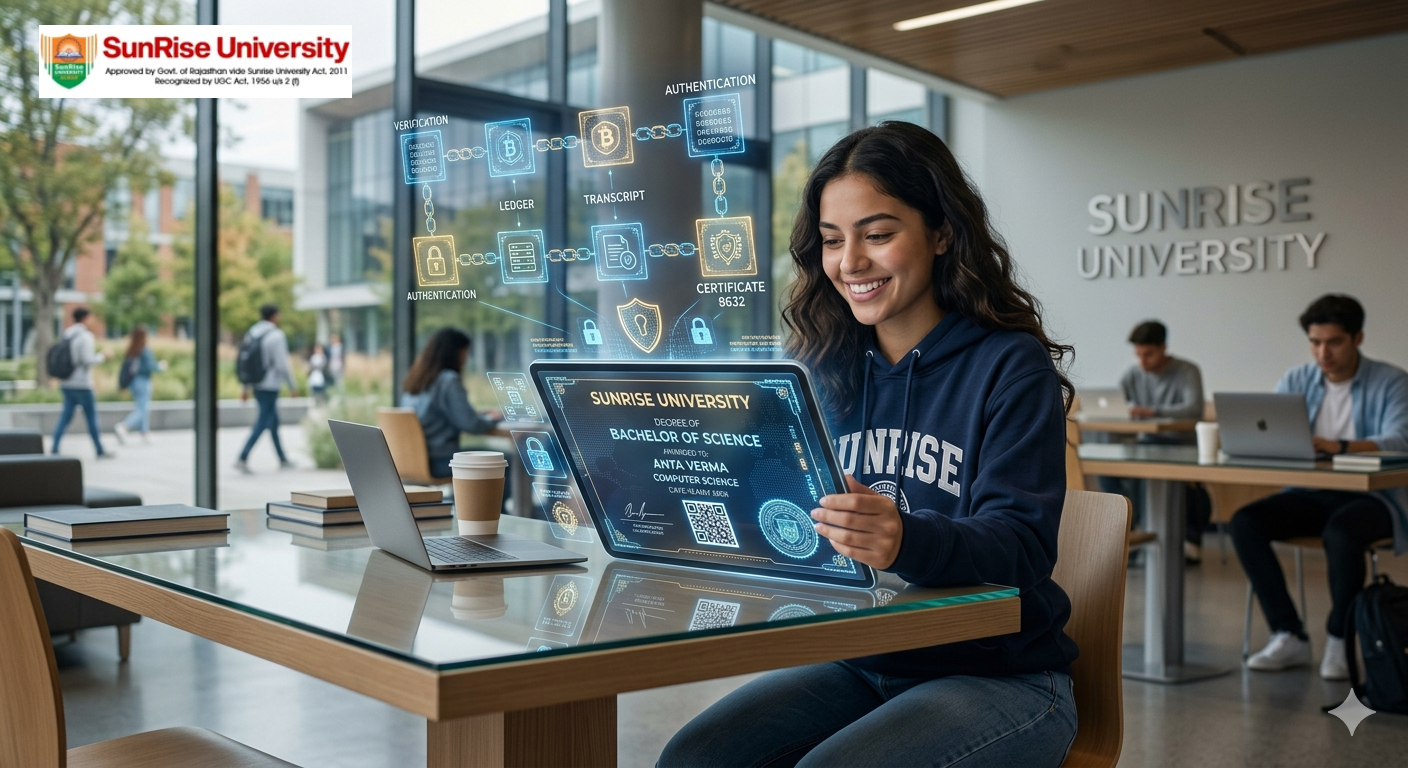
Education is rapidly transforming into a more digitized process. In today’s education, not only does one study online, but also get certified and awarded degrees digitally. However, there is one big issue — fraudulent certifications.
People make fraudulent degrees all the time, making it impossible to know what is authentic and what isn’t. Here comes blockchain to rescue by ensuring safety and security of your certificate and degree.
Let us now learn about blockchain technology in this blog post and how it is aiding our future educational needs.
1. What Is Blockchain?
The blockchain is basically a database which records information digitally and is incredibly secure. Once recorded, no one can modify or delete the stored information.
Just like any other digital diary, all the information entered in the database stays permanently safe for everyone to view.
That is why this database finds application in preserving authentic certificates and degrees.
2. Why Traditional Certificates Have Problems
Today, most schools and colleges give paper certificates or simple digital files. These can be:
- Lost or damaged
- Easily copied
- Fake or edited
Many employers find it hard to check if a certificate is real or not. This creates trust issues.
Students also face problems when they apply for jobs or study abroad.
3. How Blockchain Solves These Problems
Blockchain keeps certificates safe in a digital system. Once a certificate is added:
- It cannot be changed
- It cannot be copied as fake
- It can be verified easily
Each certificate has a unique code. Anyone can check it online and confirm if it is real.
This builds trust between students, colleges, and employers.
4. Secure Digital Certificates
Digital certificates issued to students using blockchain technology can never be lost.
Therefore, they do not have to worry about losing any documents as all data will be available on the internet. In case there is a change of contact details of students, the digital certificate is still accessible.
It becomes extremely useful for those who shift from one place to another.
5. Easy Verification for Employers
Employers often spend time checking certificates. Sometimes, they even contact colleges to confirm details.
With blockchain, this process becomes simple.
Employers can:
- Check certificates in seconds
- Trust the data
- Avoid fake applicants
This saves time and improves hiring quality.
6. Benefits for Students
Blockchain gives many benefits to students:
- No fear of losing certificates
- Easy sharing with employers
- Full control over their data
- Faster job applications
Students feel more confident because their achievements are safe and trusted.
7. Benefits for Schools and Colleges
Schools and colleges also gain from blockchain:
- No need to manage paper records
- Reduced fraud cases
- Better reputation
- Easy record management
They can issue certificates quickly and securely without extra work.
8. Global Access and Mobility
Many young people want to travel abroad for further education and career development.
But document verification may take quite a long time.
Blockchain technology solves this problem.
Students can use their verified diplomas around the globe. Educational institutions and companies can trust data right away.
It will contribute significantly to the students’ professional growth.
9. Challenges of Using Blockchain in Education
Even though blockchain is powerful, it has some challenges:
- Not all institutions use it yet
- It needs proper technical setup
- Some people do not understand how it works
Also, small schools may find it hard to adopt new technology quickly.
But as awareness grows, these challenges will reduce.
10. The Future of Blockchain in Education
Blockchain is still growing, but its future looks strong.
In the coming years:
- More schools will use blockchain
- Digital degrees will become common
- Fake certificates will reduce
It may also connect with other technologies like AI and online learning platforms.
This will make education smarter and more secure.
Conclusion
Blockchain is bringing a big change in education. It helps keep certificates safe, real, and easy to verify.
Students no longer need to worry about losing their degrees. Employers can trust the information they receive.
While there are some challenges, the benefits are much bigger.
In the future, blockchain can become a standard system for education. It will create a world where learning is not only easy but also secure and trusted.