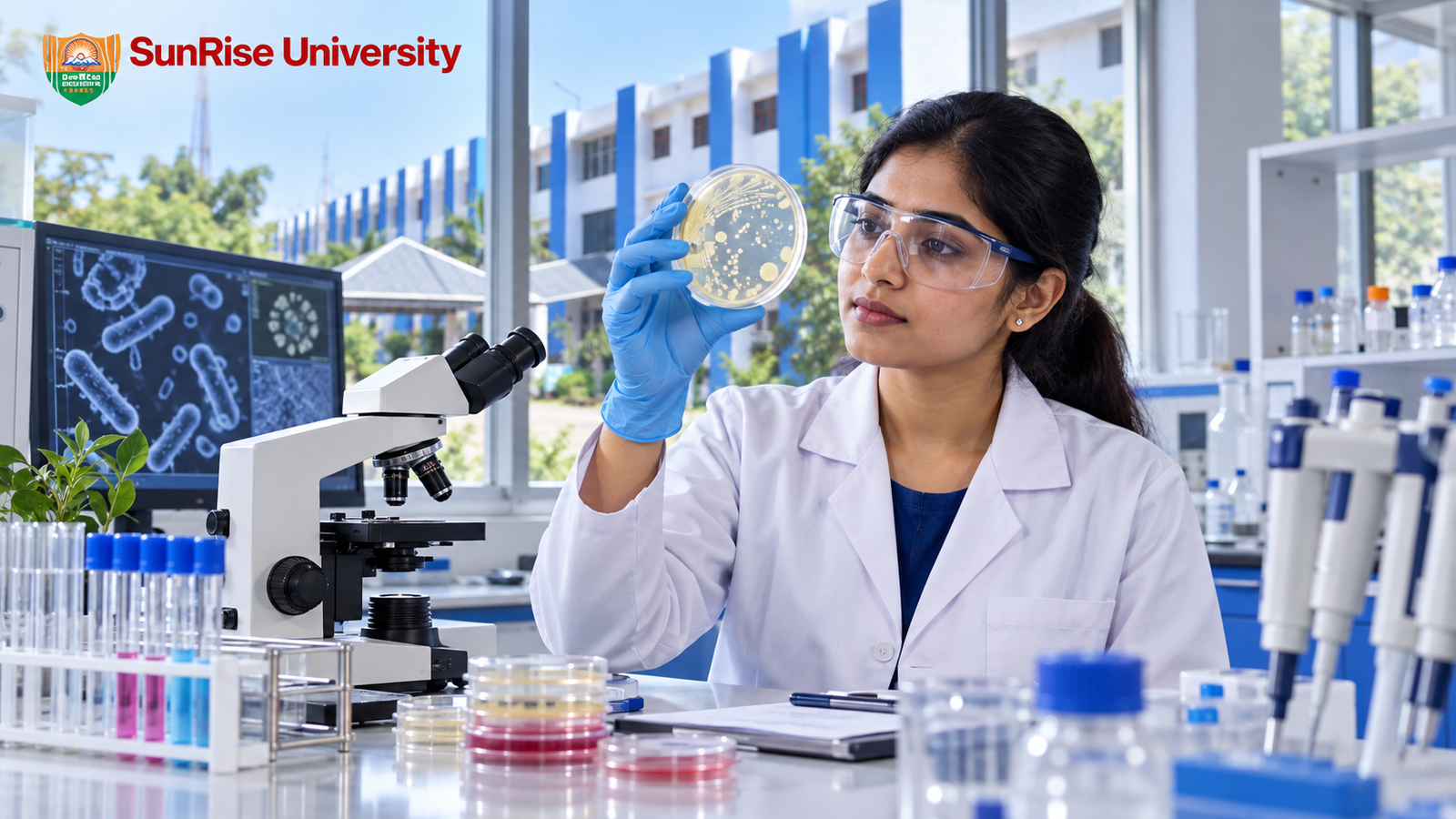
Microbiology is the scientific study of microorganisms such as bacteria, viruses, fungi, algae and protozoa. These microorganisms influence human health, agriculture, food production, pharmaceuticals and the environment. As industries place greater importance on healthcare, product safety and biological research, the scope of microbiology continues to expand.
A Master of Science in Microbiology provides advanced theoretical knowledge, laboratory training and research exposure. Graduates can explore opportunities in pharmaceutical companies, research laboratories, food industries, hospitals, biotechnology companies and environmental organisations.
This comprehensive guide explores leading MSc Microbiology jobs, salary expectations, employment sectors, required skills and the future of a microbiology career in India.
What Is M.Sc Microbiology?
M.Sc Microbiology is a postgraduate programme that focuses on microorganisms and their effects on humans, animals, plants and the environment. The course also examines how microbes can be used in medicine, manufacturing, agriculture and scientific research.
The programme commonly covers subjects such as:
- Medical Microbiology
- Industrial Microbiology
- Food Microbiology
- Environmental Microbiology
- Microbial Genetics
- Immunology
- Virology
- Bacteriology
- Mycology
- Molecular Biology
- Biochemistry
- Microbial Biotechnology
- Research Methodology
- Bioinformatics
Students may also complete laboratory projects, internships, seminars and dissertations. The exact curriculum depends on the university.
Eligibility for M.Sc Microbiology
Eligibility requirements vary among universities. Generally, applicants must have:
- A bachelor’s degree from a recognised university
- A background in Microbiology, Biotechnology, Life Sciences, Biochemistry, Botany, Zoology or another relevant discipline
- The minimum marks prescribed by the university
- Qualified through an entrance examination if required
Students should review the official eligibility and admission requirements of their selected institution before applying.
Scope of Microbiology in India
The scope of microbiology in India extends across healthcare, pharmaceuticals, food production, agriculture, biotechnology and environmental protection. Microbiologists help organisations identify microorganisms, prevent contamination, develop products and maintain quality standards.
1. Pharmaceutical Industry
Pharmaceutical companies employ microbiology postgraduates for quality control, sterility testing, production monitoring, research support and regulatory documentation.
Microbiology professionals help ensure that medicines and manufacturing environments meet the required quality and safety standards.
2. Healthcare and Diagnostic Laboratories
Microbiology plays an important role in detecting infectious microorganisms. Qualified professionals may assist with sample processing, culture testing, laboratory operations and diagnostic research.
Clinical interpretation and certain medical positions may require additional qualifications or professional registration.
3. Food and Beverage Industry
Food companies require microbiologists to test raw materials, monitor production environments and identify microbial contamination.
They may contribute to:
- Food-safety testing
- Shelf-life studies
- Fermentation
- Product-quality monitoring
- Hygiene audits
- Contamination control
4. Biotechnology Industry
Microbiology graduates can work in biotechnology companies involved in vaccines, enzymes, antibiotics, biofuels, diagnostic products and microbial technologies.
5. Agriculture
Agricultural microbiology focuses on microorganisms associated with soil, plants and crop production. Professionals can contribute to the development of biofertilisers, biopesticides and sustainable farming solutions.
6. Environmental Science
Environmental microbiologists study microorganisms involved in water treatment, waste management, pollution control and bioremediation.
7. Research and Education
M.Sc Microbiology graduates can work as research assistants or project associates in universities and research institutions. Students interested in becoming independent researchers or university professors generally need additional qualifications such as NET, JRF or a PhD, depending on the position.
Top M.Sc Microbiology Jobs
The career opportunities available after M.Sc Microbiology depend on a candidate’s specialisation, laboratory skills and experience.
| Job role | Primary responsibilities |
|---|---|
| Microbiologist | Studies microorganisms and performs laboratory testing |
| Research Assistant | Supports experiments, sample analysis and research documentation |
| Quality Control Microbiologist | Tests products and manufacturing environments for contamination |
| Quality Assurance Executive | Maintains quality systems, procedures and compliance records |
| Food Microbiologist | Examines food samples and supports food-safety processes |
| Industrial Microbiologist | Uses microorganisms in manufacturing and product development |
| Environmental Microbiologist | Studies microbes involved in water, soil and waste treatment |
| Clinical Research Associate | Supports clinical studies, data and regulatory documentation |
| Laboratory Manager | Supervises laboratory operations, staff, equipment and safety |
| Scientific Writer | Produces research, educational or regulatory content |
| Technical Sales Executive | Promotes scientific instruments, laboratory products and solutions |
| Bioinformatics Analyst | Studies biological information using computational tools |
| Project Associate | Assists with funded research projects in academic institutions |
| Microbiology Lecturer | Teaches students after meeting the institution’s eligibility requirements |
M.Sc Microbiology Salary in India
Salary after M.Sc Microbiology varies according to the position, industry, employer, city, technical skills and professional experience.
Indicative salary ranges include:
| Experience level | Approximate annual salary |
|---|---|
| Fresher or entry level | ₹2.5–₹4.5 lakh |
| 2–5 years of experience | ₹4–₹8 lakh |
| Experienced professional | ₹7–₹12 lakh |
| Senior specialist or manager | ₹10–₹18 lakh or more |
These figures are estimates rather than guaranteed packages. Recent salary listings show significant variation based on experience, employer and location. Indeed reports a broad monthly range for microbiologists in India, while current career estimates commonly place starting salaries for M.Sc Microbiology graduates at approximately ₹2.5–₹4.5 lakh annually. Indeed salary data, M.Sc Microbiology career overview
Salary by Job Profile
| Job profile | Indicative annual salary |
|---|---|
| Microbiologist | ₹2.5–₹5 lakh |
| Quality Control Microbiologist | ₹3–₹6 lakh |
| Research Assistant | ₹3–₹6 lakh |
| Food Microbiologist | ₹3–₹6.5 lakh |
| Clinical Research Associate | ₹3.5–₹7 lakh |
| Scientific Writer | ₹3–₹7 lakh |
| Environmental Microbiologist | ₹3–₹6 lakh |
| Senior Microbiologist | ₹6–₹12 lakh or more |
| Laboratory Manager | ₹6–₹12 lakh or more |
| Research Scientist | ₹6–₹15 lakh or more |
Senior research positions frequently require substantial experience, specialist expertise or a PhD.
Factors Affecting Microbiology Salary
Several factors can influence salary and career progression:
Educational Qualification
A specialised master’s degree can improve eligibility for technical roles, while a PhD may be required for senior research and academic positions.
Practical Laboratory Experience
Employers value candidates who can confidently handle equipment, follow protocols and maintain accurate laboratory records.
Industry
Pharmaceutical, biotechnology and specialised research organisations may offer different packages compared with smaller testing laboratories.
Location
Employment opportunities and salaries can vary across biotechnology and pharmaceutical hubs such as Hyderabad, Bengaluru, Pune, Ahmedabad, Mumbai, Chennai and Delhi NCR.
Technical Skills
Expertise in molecular biology, microbial culture, analytical instruments, quality systems or bioinformatics can strengthen a candidate’s profile.
Communication and Documentation
Clear laboratory documentation, report writing and communication skills are essential in regulated industries.
Government Jobs After M.Sc Microbiology
M.Sc Microbiology graduates may apply for eligible positions in government research organisations, public-health laboratories, universities, environmental agencies and food-testing departments.
Potential opportunities may be available through:
- Council of Scientific and Industrial Research laboratories
- Indian Council of Medical Research institutions
- Department of Biotechnology-supported projects
- Indian Council of Agricultural Research institutions
- Public-health laboratories
- Government universities and colleges
- Food and water-testing laboratories
- Pollution-control and environmental departments
Possible positions include project assistant, technical assistant, laboratory officer, research associate and scientific assistant. Eligibility varies by recruitment notification, and certain posts may require examinations such as NET, GATE or other relevant tests.
Higher Studies After M.Sc Microbiology
Students who want to specialise further can consider the following options:
PhD in Microbiology
A PhD is suitable for candidates interested in advanced research, scientific leadership or academic careers. Students can specialise in medical, industrial, environmental, food or agricultural microbiology.
PhD in Biotechnology or Life Sciences
Microbiology graduates can also pursue interdisciplinary research in biotechnology, molecular biology, immunology or related life-science fields.
Clinical Research Courses
A diploma or certification in clinical research may support opportunities in clinical-trial coordination, data management, pharmacovigilance and regulatory affairs.
Public Health Programmes
A Master of Public Health or related qualification can help students move towards epidemiology, disease surveillance and community-health research.
Bioinformatics and Data Science
Students interested in computational research can learn programming, statistics and biological-data analysis.
Quality Management and Regulatory Affairs
Certifications in quality assurance, Good Manufacturing Practices, laboratory standards or regulatory affairs can help candidates pursue compliance-oriented roles.
MBA in Healthcare or Pharmaceutical Management
An MBA can help science graduates transition into business development, product management, sales, operations and healthcare administration.
Skills Required for a Successful Microbiology Career
To build a competitive microbiology career, students should develop a combination of scientific and professional skills.
Laboratory Techniques
Important laboratory capabilities may include:
- Microbial culture and isolation
- Staining and microscopy
- Sterility testing
- Media preparation
- Biochemical testing
- Aseptic techniques
- Molecular biology methods
- Sample collection and preservation
Quality and Compliance Knowledge
Understanding Good Laboratory Practices, Good Manufacturing Practices, standard operating procedures and quality documentation is particularly useful in pharmaceutical and food industries.
Research and Data Analysis
Students should know how to plan experiments, record observations, analyse results and prepare research reports.
Bioinformatics Skills
Knowledge of biological databases, sequence analysis, statistics, Python or R can create opportunities in computational microbiology and genomic research.
Communication Skills
Microbiologists must communicate findings clearly through laboratory reports, research papers, presentations and technical discussions.
How to Improve Your Career Prospects
Students can improve their chances of securing quality MSc Microbiology jobs by following these steps:
- Complete an internship in a laboratory, hospital or pharmaceutical company.
- Gain hands-on experience with commonly used laboratory instruments.
- Participate in research projects and scientific conferences.
- Learn quality-control and laboratory-documentation procedures.
- Develop basic bioinformatics and statistical-analysis skills.
- Pursue relevant industry certifications.
- Create a résumé highlighting practical laboratory experience.
- Read scientific journals and remain updated on industry developments.
- Build professional connections with researchers and industry experts.
- Prepare for relevant government examinations and research fellowships.
Future Scope of Microbiology
The future scope of microbiology is influenced by developments in healthcare, biotechnology, food safety and environmental sustainability.
Infectious-Disease Research
Microbiologists contribute to the study, detection and prevention of infectious diseases and antimicrobial resistance.
Pharmaceutical and Vaccine Development
Microbial research supports the development and production of medicines, vaccines and diagnostic technologies.
Food Safety
Growing attention to product safety and quality creates opportunities in food testing, contamination prevention and fermentation technology.
Environmental Sustainability
Microorganisms can help treat wastewater, manage waste, restore polluted environments and develop sustainable biological processes.
Agricultural Innovation
Microbial technologies are being used to improve soil health, crop productivity and sustainable agricultural practices.
Genomics and Bioinformatics
Advances in genome sequencing and computational analysis are creating new opportunities for microbiologists with data and programming skills.
Is M.Sc Microbiology a Good Career Choice?
M.Sc Microbiology can be a strong career choice for students interested in microorganisms, laboratory research and biological sciences. It offers employment possibilities across several industries, but career success depends on more than the degree alone.
Practical laboratory experience, internships, quality-control knowledge and specialised technical skills can make graduates more employable. Students aiming for senior research or academic roles should also consider pursuing a PhD and relevant eligibility examinations.
Conclusion
An M.Sc Microbiology degree can lead to careers in pharmaceuticals, healthcare, food safety, biotechnology, agriculture, environmental science and research. Popular MSc Microbiology jobs include microbiologist, research assistant, quality-control analyst, food microbiologist, clinical research associate and laboratory manager.
Entry-level salaries may be moderate, but graduates can improve their earning potential through experience, specialisation and advanced qualifications. With the continuing importance of healthcare, safe food production and sustainable technologies, the future scope of microbiology remains diverse and promising.
Frequently Asked Questions
What are the best jobs after M.Sc Microbiology?
Popular options include microbiologist, quality-control microbiologist, research assistant, food microbiologist, clinical research associate, scientific writer and environmental microbiologist.
What is the starting salary after M.Sc Microbiology?
Fresh graduates may earn approximately ₹2.5–₹4.5 lakh per annum. Actual salaries depend on the employer, location, job profile and technical skills.
Can I get a government job after M.Sc Microbiology?
Yes. Eligible graduates can apply for positions in research institutes, public laboratories, universities, food-testing departments and environmental organisations.
Can I work in a hospital after M.Sc Microbiology?
Graduates may find suitable laboratory or research-support positions in hospitals and diagnostic organisations. Certain clinical roles require additional medical qualifications, registration or certification.
Is a PhD necessary after M.Sc Microbiology?
A PhD is not required for every job. However, it is generally valuable—and sometimes necessary—for independent research, senior scientist and university-level academic positions.
Which field of microbiology has good career scope?
Pharmaceutical microbiology, food microbiology, industrial microbiology, molecular microbiology, environmental microbiology and bioinformatics offer promising career paths.
Can M.Sc Microbiology graduates enter the pharmaceutical industry?
Yes. Pharmaceutical companies recruit qualified candidates for quality control, sterility testing, production support, research assistance and documentation roles.