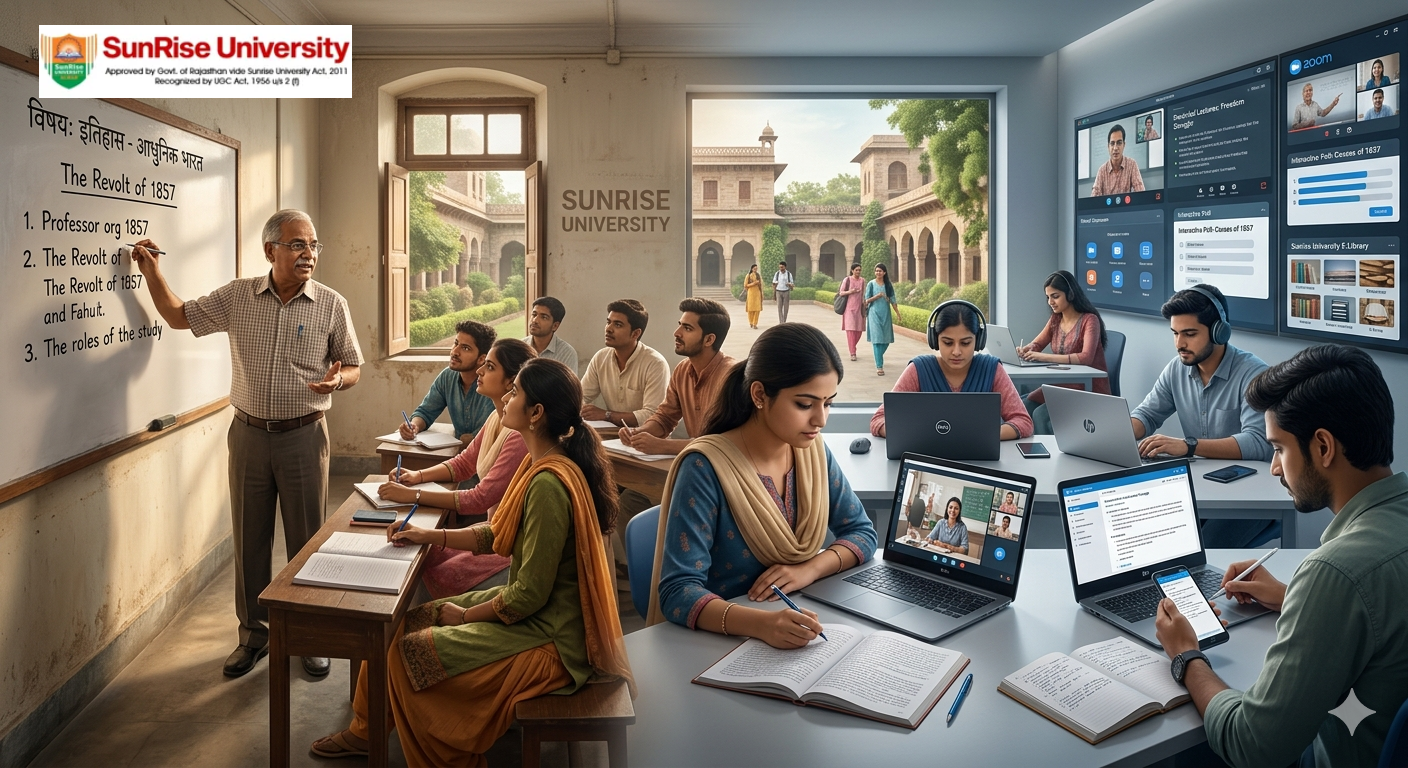
Education in India has undergone rapid changes. The learners today do not have any limitations of learning from the classroom alone. Nowadays, many universities in India are practicing the system of hybrid learning.
Hybrid learning is rapidly gaining popularity among the Indian universities as it makes the learning process flexible and effective.
This blog explains the importance and growth of hybrid learning in India.
1. What Is Hybrid Learning?
Definition of hybrid learning
Hybrid learning is the combination of online learning and conventional classroom learning.
Students can:
- Attend classes in college
- Learn through online videos
- Submit assignments online
This combination makes learning more flexible and easy.
2. Growth of Hybrid Learning in India
Hybrid learning has been increasing significantly in India over the years.
Indian universities have introduced the practice of using online resources in addition to class learning. Programs such as SWAYAM and National Digital Library of India have helped students gain access to various online resources.
The trend of hybrid learning has accelerated post-pandemic due to the need for online learning. Importance of hybrid learning.
3. Benefits of Hybrid Learning for Students
Hybrid learning comes with numerous advantages:
- Flexibility to study anytime
- Access to online resources
- Better understanding with videos and live classes
Students can learn at their pace and review their lessons at ease.
4. Better Access to Quality Education
Not all learners have equal access to the best universities. Hybrid learning has resolved this issue.
Students from small towns can now:
- Watch lectures from top universities
- Learn from expert teachers
- Access quality study material
It reduces the difference between education in cities and villages.
5. Role of Technology in Hybrid Learning
Technology is the backbone of hybrid learning.
Tools like:
- Video lectures
- Online tests
- Learning apps
help students learn better.
Platforms like SWAYAM make it easy for students to access free courses.
6. Challenges of Hybrid Learning
Hybrid learning is helpful, but it also has some challenges:
- Internet issues in some areas
- Lack of devices for students
- Difficulty in managing time
Some students also find it hard to stay focused during online classes.
7. Role of Teachers in Hybrid Learning
Teachers play an important role in this system.
They need to:
- Use digital tools
- Create engaging content
- Support students online and offline
Good teachers make hybrid learning more effective and interesting.
8. Impact on Student Life
Hybrid learning is changing student life in many ways.
Students now:
- Spend less time traveling
- Have more time for self-study
- Use digital tools daily
This creates a more modern learning experience.
9. Future of Hybrid Learning in India
Hybrid learning is not a temporary change. It is the future of education.
In the coming years:
- More universities will adopt hybrid models
- Online content will improve
- Learning will become more flexible
India is moving towards a smarter education system.
10. Tips for Students to Succeed in Hybrid Learning
Students can follow these tips:
- Create a daily study schedule
- Stay focused during online classes
- Use online resources wisely
- Practice self-discipline
These habits will help students get the best results.
Conclusion
Hybrid learning is revolutionizing the study habits of Indian college students.
The concept involves combining the positive aspects of offline and online learning.
It becomes easier for learners to receive quality education by using SWAYAM platform.
There are various issues in hybrid learning, however, its benefits outweigh its negatives.
Students who embrace this learning approach will have the upper hand in the future.