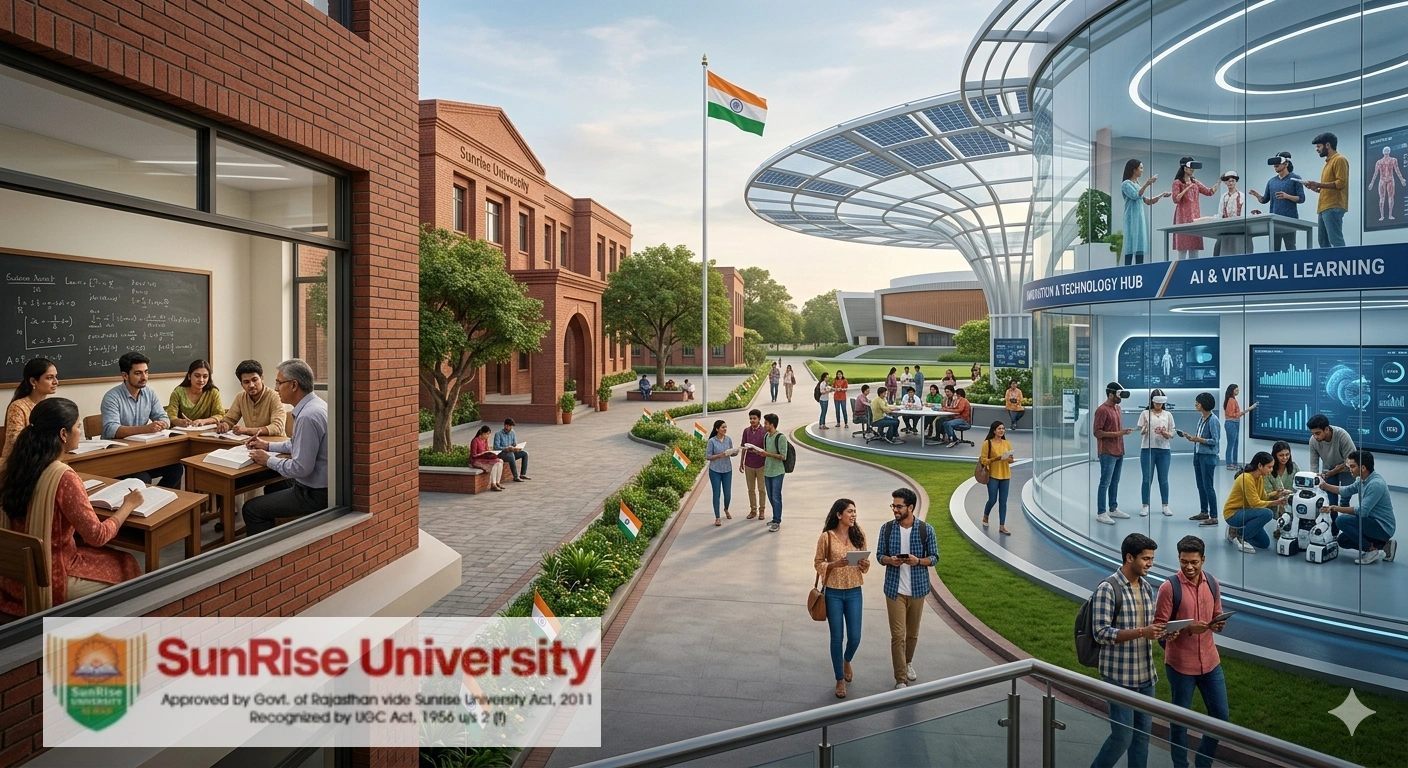
1. Introduction to India’s Evolving Education Landscape
Historical Overview of Education Policies in India
Indian educational policy has undergone a gradual yet profound metamorphosis. From its focus on making education accessible to its structured reforms in the latter half of the twentieth century, educational policy has evolved to reflect the nation’s socio-economic aspirations. Earlier educational policies and systems placed emphasis on standardization and expansion. However, in the process, they inadvertently became rigid and left little room for innovation and flexibility.
The Need for Reform in Higher Education
The need for educational reform became increasingly apparent in an increasingly globalized and technologically accelerated world. Universities and educational institutions that once symbolized knowledge and learning began to show signs of obsolescence. Graduates possessed theoretical knowledge but lacked practical finesse. This dichotomy necessitates a paradigmatic shift that aligns academic learning with reality.
Vision Behind Modern Policy Frameworks
Modern educational policies are guided by a visionary ideology. Rather than making graduates employable, contemporary educational policy aims to create enlightened individuals. From fostering critical inquiry and creativity to promoting intellectual diversity, education is no longer viewed as a linear process but rather as a continuum.
2. Key Highlights of the New Education Policy
Multidisciplinary and Holistic Education Approach
Multidisciplinary Education is the core of the new policy framework. The student is encouraged to explore the various academic terrains. The student may choose to combine the sciences with the humanities or the arts with technology.
Flexible Degree Structures and Multiple Exit Points
The rigid academic route has given way to flexible structures. The introduction of multiple exit points allows the student to take breaks and resume their academic journey. The student is not forced to abandon their earlier learning. The certificates, diplomas, and degrees are no longer separate entities. They are part of the same umbrella.
Emphasis on Skill-Based and Experiential Education
The policy places much emphasis on experiential learning. The internships, project work, and problem-solving are no longer peripheral. They are the core of the learning experience. The acquisition of skills is given due importance along with the knowledge.
3. Transformation in University Learning Models
Shift from Rote Learning to Conceptual Understanding
The conventional method of rote memorization is slowly but surely being replaced by the emphasis on clear concepts. Students are encouraged to think, analyze, and synthesize the information provided to them.
Integration of Technology and Digital Platforms
Technology has become the indispensable companion of the modern education system. Digital platforms enable the dissemination of a vast amount of information, which can be accessed from any location.
Rise of Blended and Hybrid Learning Environments
The emergence of a blend of online and offline learning methodologies, also called blended learning, is gaining popularity.
It offers the advantages of a virtual classroom while maintaining the human touch of a classroom setting.
4. Impact on Students and Academic Institutions
Enhanced Student Autonomy and Choice
Students now have more freedom and independence in controlling their own learning pathways. The freedom to choose courses from different disciplines gives them power to shape their own learning experiences.
Institutional Restructuring and Governance Reforms
Institutional structures and academic organizations are undergoing restructuring to comply with new policies. Governance structures have been simplified to promote greater transparency and accountability. Universities are being encouraged to embrace a more decentralized and flexible way of functioning.
Challenges in Implementation and Adaptation
In spite of its progressive nature, one of the biggest challenges in implementing this is a lack of resources and infrastructure, along with a lack of willingness to embrace change.
5. Industry Alignment and Employability Focus
Bridging Skill Gaps Through Curriculum Redesign
The curriculum is being redesigned to suit the needs of the industry. This helps in ensuring that students are equipped with the necessary skills.
Collaboration Between Universities and Industry
The collaboration between the industry and the university is becoming the new norm. This collaboration is in the form of joint ventures and courses conducted by the industry. This helps in enriching the learning environment.
Internships, Vocational Training, and Practical Exposure
Practical exposure is the need of the hour for the holistic development of the students. Internships and vocational training are the best ways of providing this exposure.
6. Globalization and Internationalization of Education
Foreign University Collaborations and Campuses
The policy framework encourages collaboration with international institutions. Foreign universities are being invited to establish campuses, fostering a global academic milieu. This exchange of knowledge enhances educational quality.
Student Mobility and Global Exposure
There is an emphasis on student mobility. This is enabling students to gain global exposure.
Positioning India as a Global Education Hub
India is aiming to become a global education hub. This is reflected in its aim to improve the quality and accessibility of education so that students from all over the world can be attracted to come to this country.
7. Future Trends in University Learning
Lifelong Learning and Continuous Upskilling
The idea of lifelong learning is catching on. Education is no longer limited to traditional institutions or age groups. Continuous learning is now imperative in the rapidly changing workforce.
Emergence of Micro-Credentials and Modular Education
Micro-credentials provide a flexible and focused way to learn. Modular education allows individuals to develop skills without engaging in long-term learning programs.
Role of Artificial Intelligence and Emerging Technologies
Artificial intelligence and other emerging technologies will revolutionize learning.
8. Conclusion: The Road Ahead
Opportunities and Challenges in Policy Execution
The new education policies offer a plethora of opportunities, but success depends on the proper execution of the policies.
Long-Term Vision for Higher Education in India
The long-term vision for higher education in India is ambitious and transformational in its scope and objectives. It seeks to create a world-class education system that is inclusive, equitable, and competitive at a global level.
Building a Resilient and Future-Ready Academic Ecosystem
The academic ecosystem must be resilient to drive success in the long run. India must embrace change and encourage collaboration to create a future-ready education system, which not only seeks to provide knowledge but also to encourage ingenuity and purpose.