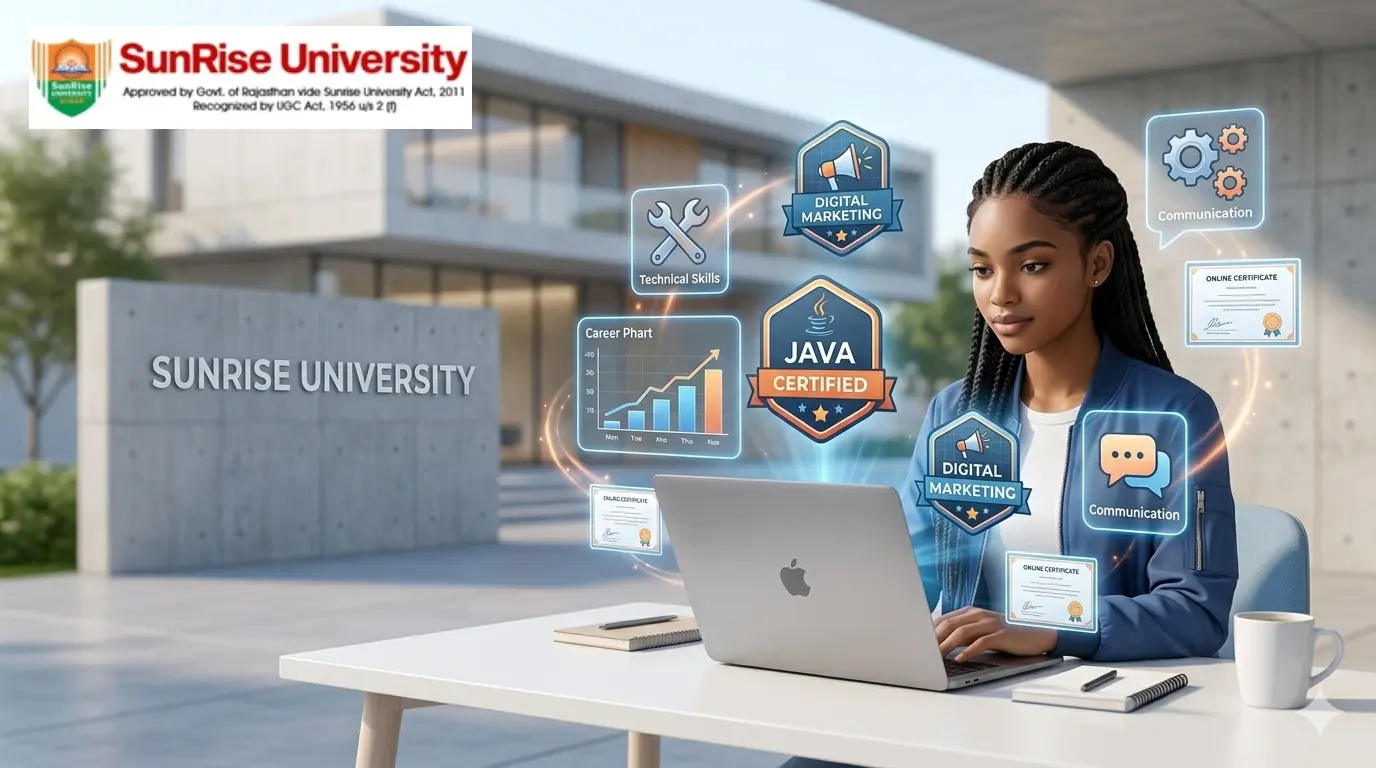
Introduction to Micro-credentials for Students
Education is changing. The world of learning no longer depends only on long degrees that take many years to finish. Today, students and employers both want faster ways to gain useful knowledge. This is where micro-credentials for students enter the picture.
In the past, a college degree was the only way to secure a good job. Today, the world of work changes fast. Technology changes every year. New technology emerges overnight. As a result, employers often look for particular skills rather than a degree.
The new learning system has created a strong demand for micro-credentials. These credentials enable learners to acquire new skills in a shorter period. Learners no longer have to spend many years studying various subjects. They can acquire particular knowledge, which matches the needs of the real world.
The new system of learning provides many benefits to the learners.
What Are Micro-credentials?
Micro-credentials are credentials or awards given to learners to prove their ability to acquire a particular skill or subject. These credentials differ from traditional college degrees, as they enable learners to acquire a single skill rather than many.
For instance, a learner may acquire a micro-credential in digital marketing, data analysis, or project management. These credentials prove to employers that the learners have acquired the ability to use the particular skill.
One of the advantages of micro-credentials for learners is their compact nature. They usually require less time than traditional courses. While some may be accomplished within a matter of weeks, others may only take a few days to finish.
Another difference between these two forms of credentials relates to their area of concentration. Traditional degrees usually involve a broader concentration on theoretical knowledge. Micro-credentials, on the other hand, are focused on the development of skillful learning that can be practically applied to real-world settings.
This kind of learning style is advantageous to both the learner and the employer.
How Micro-credentials Work
The structure of micro-credentials is designed to be simple and accessible. The process involved in completing most micro-credentials includes short lessons, assignments, and a final evaluation.
The process begins with the learner completing a series of short lessons. Each lesson covers a particular skill or concept. After completing the lessons, the learner then undertakes an evaluation. This may include tests or real-world simulation.
Once the learner completes the program, they are then issued a digital badge or a certificate. These badges are a clear way for the learner to showcase their achievements. The learner can use this to enhance their resume or other work-related documents.
The use of digital badges for micro-credentials for the learner makes this kind of credential highly advantageous.
Types of Micro-credentials Students Can Earn
There are many types of micro-credentials that one can acquire. Each one is specialized in a unique type of skill.
Technical Skill Credentials
Technical skills include knowledge that one has about technology or tools. Examples of technical skills include coding, graphic design, cybersecurity, and data analysis.
Technical skills assist learners in showing their knowledge in technical fields where technical knowledge is essential.
Soft Skill Credentials
Not all important skills involve technology. Communication, leadership, teamwork, and critical thinking skills are important to many employers.
Students may acquire micro-credentials in soft skills that help them show their capability to work with others.
Industry-recognized Credentials
Some micro-credentials may be developed with the assistance of experts from the relevant industry. Such credentials are important since they meet the needs of the relevant industry.
Why Micro-credentials Matter in Today’s Job Market
The current job market is very competitive. A company may receive hundreds of applications from candidates wishing to fill one position. As a result, companies look for evidence that one has the right skills.
This is where micro-credentials for students become valuable.
First, they prove competence. Instead of relying on transcripts, employers can see evidence of competence.
Second, they prove initiative. Earning micro-credentials shows that students are willing to go the extra mile to learn.
Lastly, micro-credentials are very relevant to the industry. Most micro-credentials are developed with the input of employers. Therefore, students are equipped with skills that are immediately relevant to the workplace.
Benefits of Micro-credentials for Students
There are several advantages associated with micro-credentials.
Flexible Learning Opportunities
Micro-credential learning can be conducted online. Therefore, students can study at their own pace. They can do this concurrently with work, internships, or other responsibilities.
Career-Focused Education
In traditional learning, students may be forced to study topics that are not relevant to their careers. Micro-credentials are very relevant to the industry. They are designed to equip students with skills that are relevant to the industry.
This means that students can acquire relevant skills very quickly.
Affordable Skill Development
Another advantage is cost. Most micro-credentials are very cheap compared to undertaking a degree program.
Students can acquire valuable knowledge without incurring huge costs associated with undertaking higher learning.
How Students Can Earn Micro-credentials
There are a number of ways in which students can obtain micro-credentials.
There are a number of online learning platforms that provide courses with recognized certifications. There are a number of online platforms that provide training in a variety of fields, such as business, technology, art, etc.
Universities and other training centers are also offering micro-credentials to students. Some of these centers are offering this within their existing programs.
Workshops, boot camps, and other professional courses may also be offering micro-credentials to students.
Students can thus obtain a number of diverse skills through a combination of all these options.
Challenges and Limitations of Micro-credentials
Though there are a number of benefits to micro-credentials, there are also a number of difficulties associated with it.
One concern involves recognition. Not all employers are aware of all the programs offered in micro-credentials. Some employers may also prefer certain programs over others.
Another issue involves quality.Since a number of organizations are offering micro-credentials to students, there are a number of differences in the quality of programs offered by these organizations.
Future of Micro-credentials in Education
The role of micro-credentials in the lives of students is likely to be enhanced in the coming years. Education systems are gradually shifting towards skill-based learning.
Employers are focusing more on skill-based learning than academic learning. Technology is also contributing to the shift in the way that people learn and get educated.
Universities are starting to incorporate micro-credentials in their formal education system. This is a hybrid system that combines traditional knowledge and skill-based certification.
These changes are indicative of the fact that micro-credentials are going to be an integral part of the educational system in the future.
Conclusion: Why Micro-credentials Are the Future for Students
The emergence of micro-credentials in the lives of students is an indication of the fact that people are shifting towards alternative ways of learning and acquiring the required skill sets in a fast-moving world.
Micro-credentials are an alternative way of learning that is required in the modern world.
Micro-credentials offer focused learning, quick certification, and skill-based certification, which are essential in the modern world.
Traditional academic learning is still important, and micro-credentials offer an additional level of specialization.
For students, micro-credentials are an alternative that can be very beneficial in the modern world.