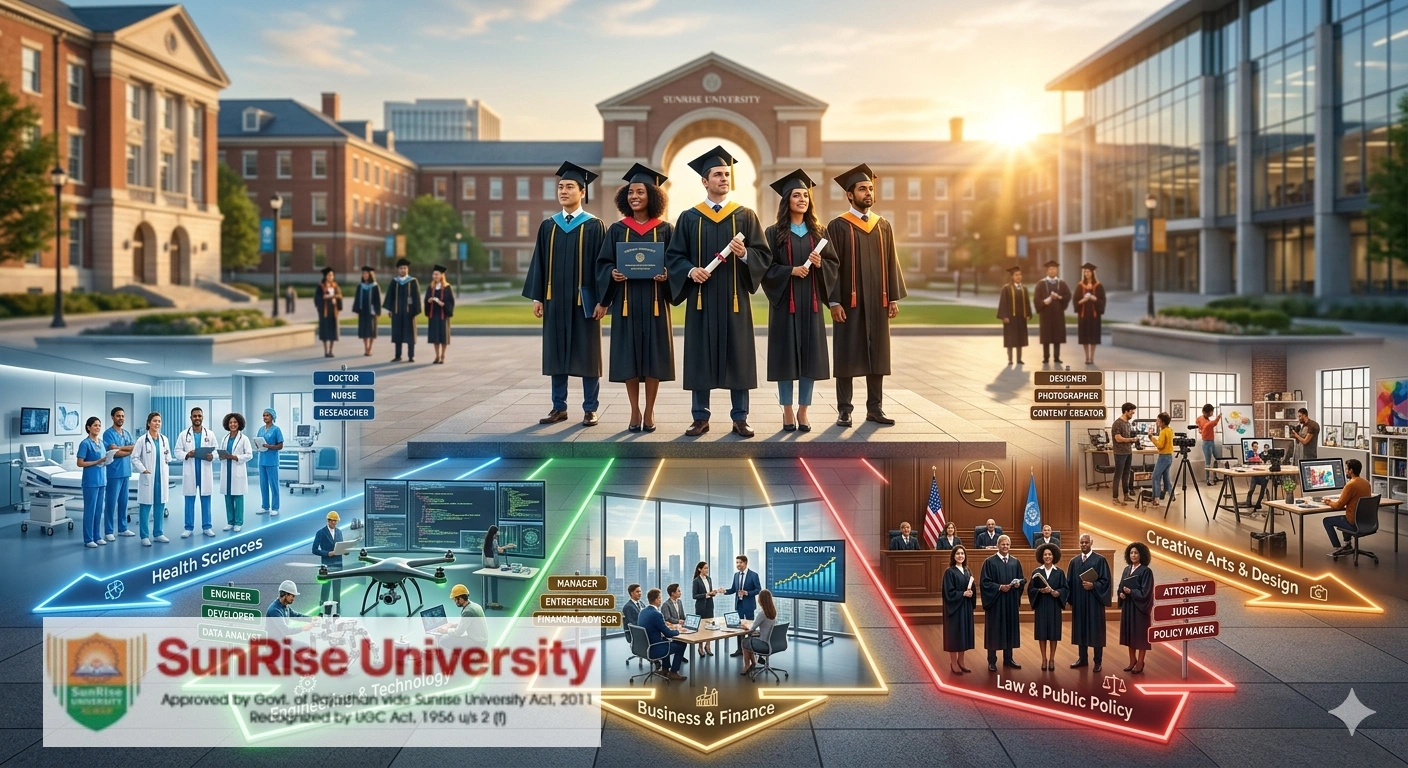
1. Understanding Different Majors
What is a Major in College
A major is the main subject you study in college. It can be science, commerce, arts, or any professional course.
It decides what kind of knowledge you will gain during your studies.
Why Choosing the Right Major Matters
Choosing the right major is very important.
It affects your future job and career path. If you choose a subject you like, you will enjoy studying and working in that field.
How Majors Shape Your Future Career
Your major helps you build skills. It also opens doors to different jobs.
For example, a science student may become an engineer or doctor, while a commerce student may work in business.
2. Career Options After Science Majors
Engineering and Technology Careers
Students with science majors can go into engineering.
They can become software engineers, civil engineers, or mechanical engineers. These jobs are in high demand.
Technology jobs also offer good salary and growth.
Medical and Healthcare Careers
Students can also choose medical careers.
They can become doctors, nurses, or pharmacists.
These jobs are important because they help people stay healthy.
Research and Science-Based Jobs
Some students like research.
They can work as scientists or lab researchers.
These jobs need deep study and patience, but they are very rewarding.
3. Career Options After Commerce Majors
Business and Management Careers
Commerce students can work in business fields.
They can become managers, sales executives, or business analysts.
These roles need good planning and leadership skills.
Finance and Accounting Jobs
Many students choose finance careers.
They can become accountants, bankers, or financial advisors.
These jobs deal with money and require accuracy.
Entrepreneurship and Startups
Some students start their own business.
They become entrepreneurs.
This path is risky but can bring great success.
4. Career Options After Arts and Humanities Majors
Careers in Media and Communication
Arts students can work in media.
They can become writers, journalists, or content creators.
These jobs need creativity and good communication.
Teaching and Social Work
Teaching is a popular career.
Students can become teachers or professors.
Social work is also a good option for those who want to help people.
Government and Civil Services
Arts students often prepare for government jobs.
They can join civil services, police, or other public roles.
These jobs offer stability and respect.
5. Career Options After Professional Courses
Law Careers
Law students can become lawyers or judges.
They can work in courts or companies.
This field needs strong thinking and speaking skills.
MBA and Corporate Roles
MBA students work in companies.
They take roles in management, marketing, and HR.
These jobs offer fast career growth.
Design, Hotel Management, and Other Fields
There are many other courses too.
Students can go into fashion design, hotel management, or animation.
These careers are creative and exciting.
6. Skills Needed for Every Career
Communication and Teamwork
Good communication is very important.
You must be able to share ideas clearly.
Teamwork helps you work well with others.
Problem-Solving and Thinking Skills
Every job has problems.
You need to think and find solutions.
This skill makes you valuable at work.
Basic Technical and Digital Skills
Today, most jobs use technology.
Basic computer knowledge is a must.
Learning new tools can help you grow faster.
7. Tips for Choosing the Right Career Path
Know Your Interests and Strengths
Think about what you enjoy.
Also, understand what you are good at.
This will help you choose the right path.
Research Job Roles and Growth
Learn about different careers.
Check salary, growth, and future demand.
This helps you make a smart decision.
Gain Experience Through Internships
Try internships or part-time work.
They give real-world experience.
You will learn what the job is really like.
8. Conclusion
Choosing a career is an important decision.
Each major offers many opportunities. You just need to explore them.
Focus on your interests. Build the right skills. Gain experience.
With the right steps, you can build a strong and successful career.